
Experimental Bases
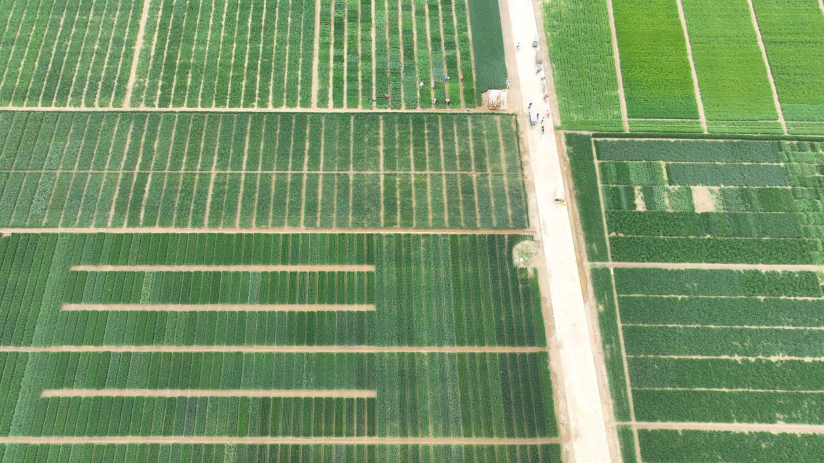
ICS-CAAS, aligned with national strategic needs and focused on crop science, has established 12 comprehensive and specialized experimental bases and over 1,000 testing and demonstration sites for new varieties across China’s major grain-producing regions, including North China, Northeast China, the Huang–Huai region, and South China. Adhering to a long-term, on-the-ground approach and the principle of “build well, use well, and maintain well,” ICS-CAAS is accelerating base infrastructure development, increasing R&D investment, and stabilizing research teams, thereby improving the comprehensive research capacity of its bases year by year. First, base functions are clearly defined: consistent emphasis is placed on germplasm identification and creation, gene-function research, variety development, and high-yield, high-efficiency cultivation, with faster R&D and demonstration of new varieties and technologies to build first-class platforms for scientific innovation and technology transfer. Second, infrastructure has been steadily upgraded: bases have constructed irrigation systems and field roads, and are equipped with workrooms, drying yards, machinery sheds, and warehouses; nearly one hundred pieces of agricultural machinery strongly support experimental work. Third, operations and management are standardized and efficient: bases operate under two models—centralized management by the Base Management Division and team-based self-management; centralized bases follow a tiered “division head–station head–operations lead” structure, while team-managed bases are run by designated research teams. Fourth, the bases are fertile ground for innovation: each year they host and implement projects under the National Key R&D Program, biological breeding, joint seed-industry initiatives, and more; to date, they have developed 500+ new varieties with a cumulative promotion area exceeding 5 billion mu (≈ 333 million ha), providing strong support for national food security. Fifth, the bases significantly drive local agricultural development: annually they showcase about 200 new varieties of wheat, maize, soybean, rice, and other crops, along with 20+ new technologies; they organize “Open Day” events inviting large enterprises and leading growers for on-site observation, enabling in-place adoption, demonstration, and dissemination of advanced scientific outcomes that deliver robust technological support to local agriculture.

Address:No.12 Zhongguancun South St.,Haidian
District, Beijing, P.R.China 100081
Tel: +86-10-82105813
Email:zkskyc@caas.cn
Fax:+86-10-82105819