
CAAS-KU Joint Lab on Food Legume Research
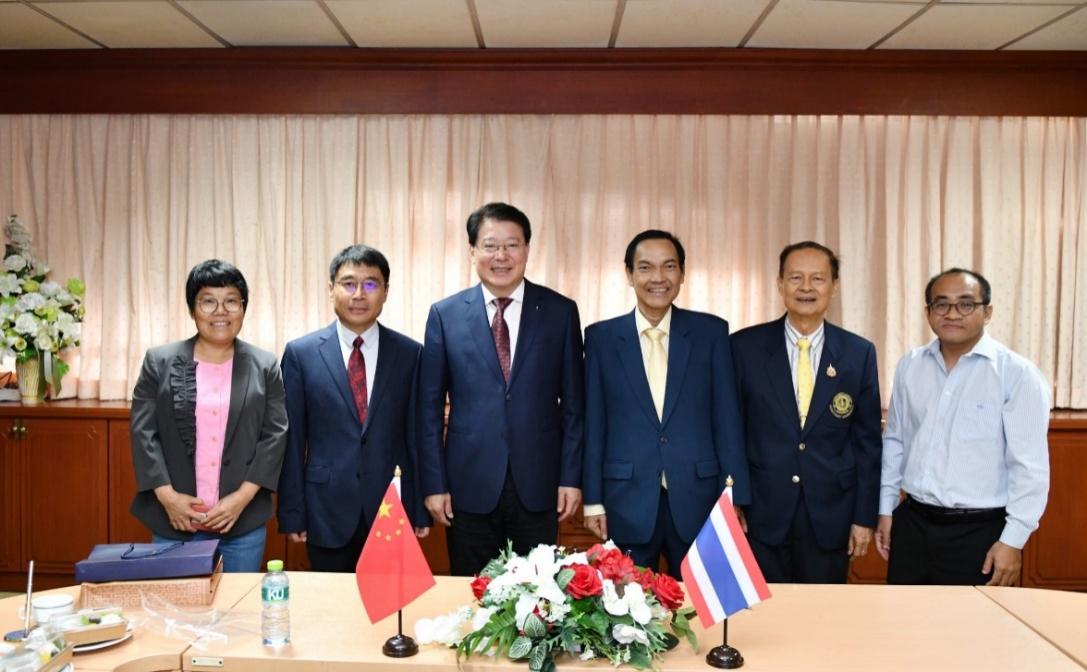
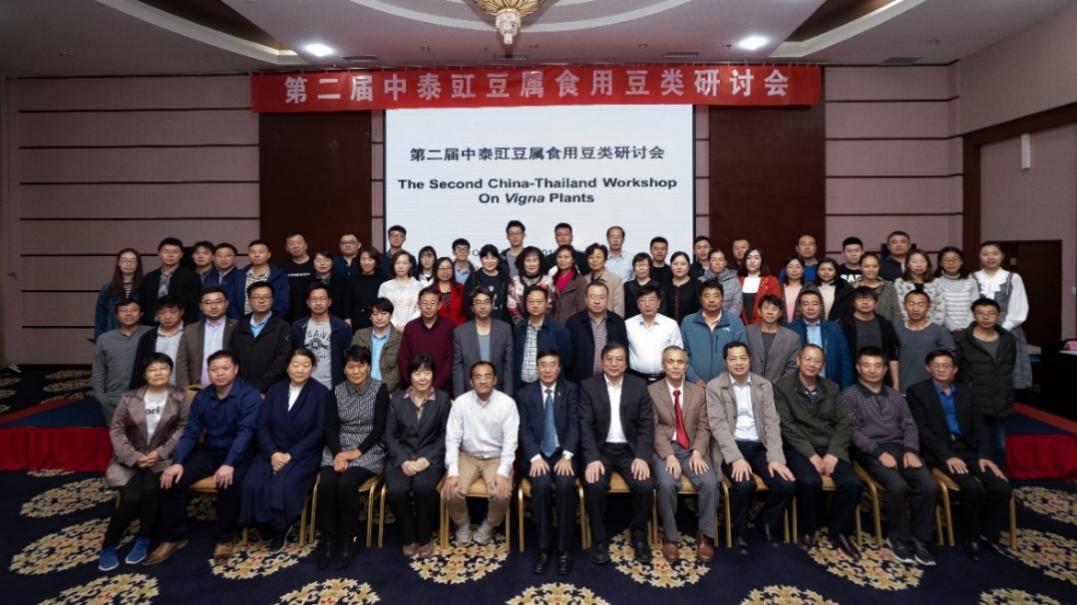
The CAAS-KU Joint Lab on Food Legume Research was established in 2018 between China and Thailand. The laboratory aims to conduct research on the collection and evaluation of food legume germplasm resources, discovery of novel genes, and breeding of new varieties, while establishing mechanisms for international technology cooperation and talent development. Since its inception, collaborative research has been carried out in areas such as cloning and regulatory mechanism analysis of seed dormancy-related genes in mung beans, construction of a core germplasm collection and whole-genome sequencing with population genetic evolution analysis in rice beans, and QTL mapping of domestication and salt tolerance traits in wild cowpeas. Joint field investigations of food legume germplasm resources in northern and western Thailand have been conducted, along with collaborative identification of important agronomic traits such as salt tolerance and bruchid resistance. Wild rice bean germplasm resources with strong salt tolerance and high bruchid resistance have been identified. These research outcomes have effectively advanced the study of food legume germplasm resources in China and enhanced the international influence of China’s food legume research community.
By June 2025, over 400 accessions of germplasm resources have been introduced from Kasetsart University, Thailand, including 87 accessions of international core rice bean germplasm. Field investigations in northern Thailand have been completed, resulting in the introduction of 137 wild accessions involving 33 related species, thereby increasing the proportion of wild materials in China’s food legume germplasm collection. Five bruchid-resistant mung bean accessions have been introduced, providing a material foundation for resistance breeding. Bilateral exchanges have involved more than 20 visits, and four joint papers have been published.

Address:No.12 Zhongguancun South St.,Haidian
District, Beijing, P.R.China 100081
Tel: +86-10-82105813
Email:zkskyc@caas.cn
Fax:+86-10-82105819