
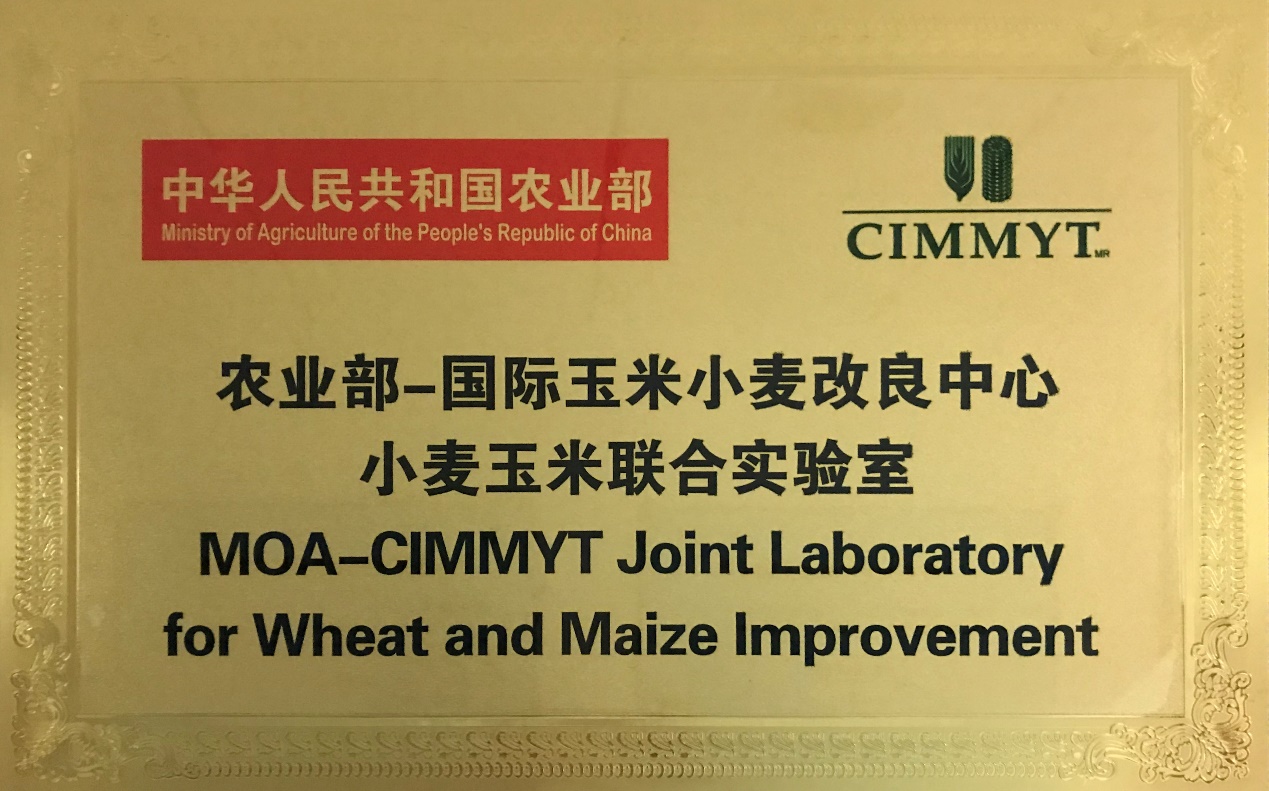
MOA-CIMMYT Joint Laboratory for Maize and Wheat
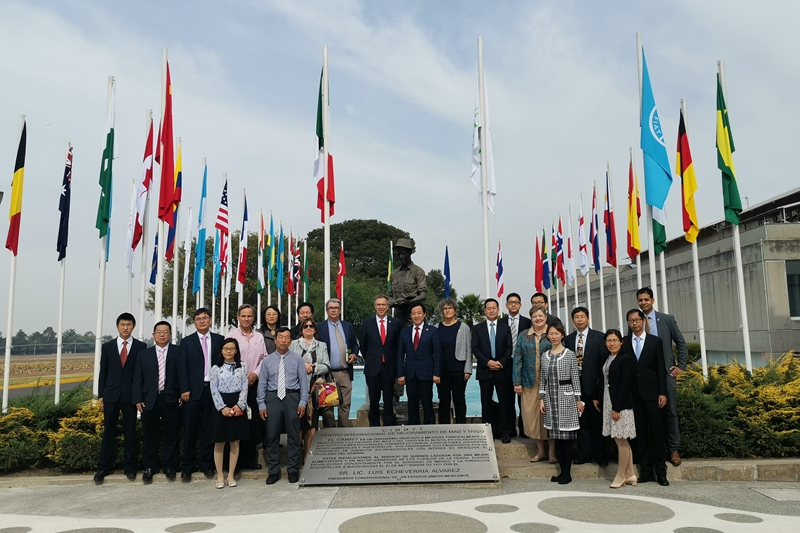
The MOA-CIMMYT Joint Laboratory for Maize and Wheat was established in 2019, with the International Maize and Wheat Improvement Center (CIMMYT) as the international partner. The Chinese partners are led by the Institute of Crop Sciences of the Chinese Academy of Agricultural Sciences, with participation from the Institute of Plant Protection of the Chinese Academy of Agricultural Sciences, China Agricultural University, Henan Agricultural University, Shandong Agricultural University, Hebei Agricultural University, Henan Academy of Agricultural Sciences, Shandong Academy of Agricultural Sciences, Xinjiang Academy of Agricultural Sciences, and Shanghai Academy of Agricultural Sciences. The joint laboratory aims to leverage the strengths of Chinese agricultural research institutions and CIMMYT to promote sustainable agricultural development in China and expand China’s international influence by facilitating the transfer of technologies to other developing countries.
By June 2025, significant achievements have been made in germplasm introduction and utilization, molecular technology application, and talent training. A total of 28,000 germplasm accessions have been introduced and preserved in the national germplasm bank for long-term storage, with distributions to over 40 institutions for utilization. Collaborative efforts have led to the development of 120 new crop varieties, cultivated on a cumulative area of more than 600 million mu (approximately 40 million hectares). A novel breeding method for adult plant resistance with broad-spectrum resistance has been established, and 50 functional molecular markers have been identified and validated, with applications in 24 countries including the United States and Australia. Additionally, 3,000 maize populations and inbred lines have been introduced, leading to the development of over 50 new varieties, 13 of which are now cultivated in countries such as Nepal. Approximately 300 Chinese researchers have participated in exchange programs at CIMMYT, and 8–10 students or visiting scholars are sent to CIMMYT annually for collaborative research.
Address:No.12 Zhongguancun South St.,Haidian
District, Beijing, P.R.China 100081
Tel: +86-10-82105813
Email:zkskyc@caas.cn
Fax:+86-10-82105819